

Have you ever wondered why your hair grows, sheds, and eventually regenerates? The answer lies in the fascinating process known as the hair growth cycle. Understanding this cycle can shed light on how to maintain healthy, luscious locks. Join us at Osā Ayurveda – as we delve into the intricate stages of the hair growth cycle and uncover the secrets to promoting optimal hair health and length.
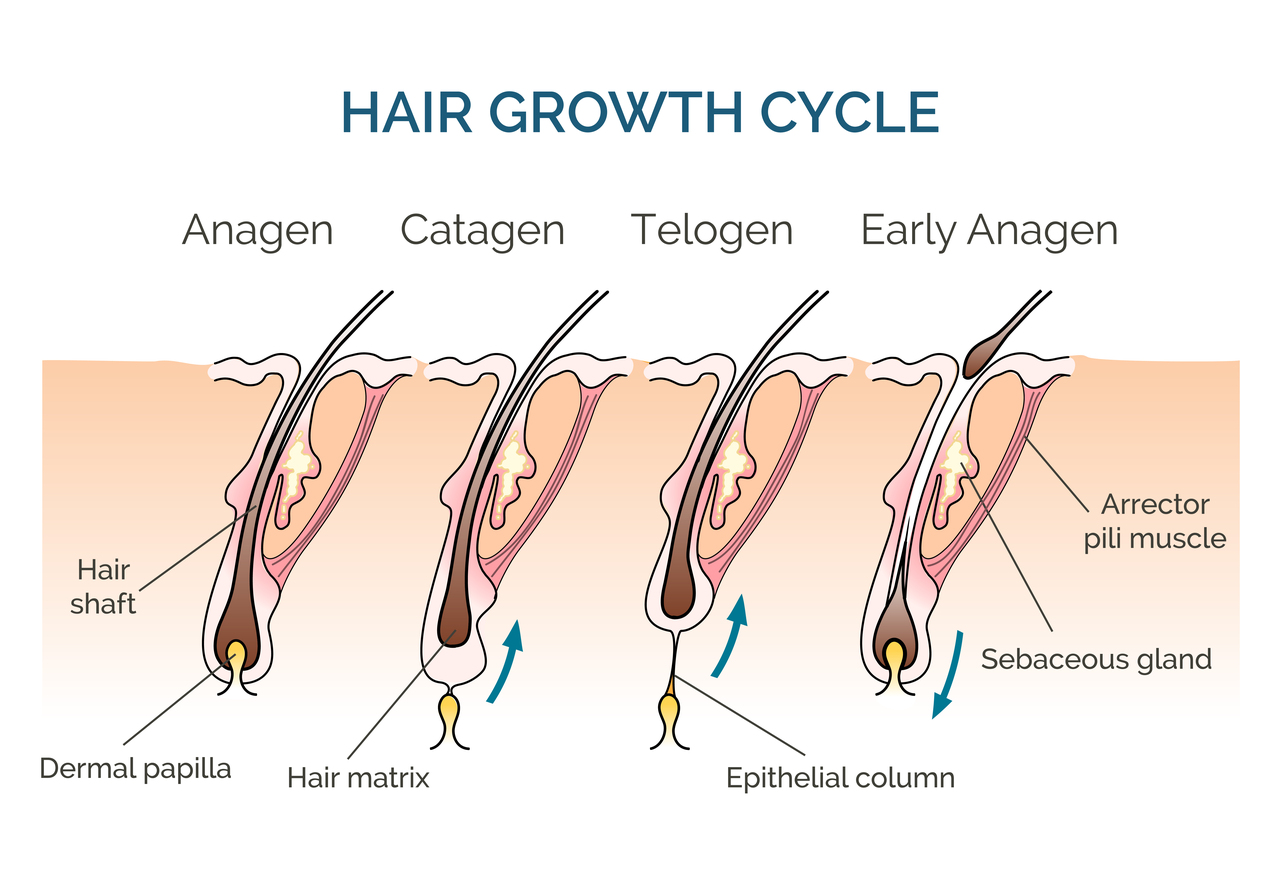
Anagen Phase: The Growth Stage
The first stage of the hair growth cycle is known as the anagen phase, or the growth stage. During this phase, the hair follicles are actively growing, and hair strands can increase in length by approximately half an inch per month. The duration of the anagen phase varies depending on genetics, with some individuals experiencing longer periods of growth than others. Factors such as age, hormones, and overall health can also influence the length of the anagen phase.
Catagen Phase: The Transition Stage
Following the anagen phase is the catagen phase, a transitional stage marked by the cessation of hair growth. During this brief phase, which lasts for about two to three weeks, the hair follicles shrink and detach from the blood supply, causing the hair strand to become disconnected from the root. While the catagen phase represents the end of active hair growth, it serves as a preparation for the next stage of the cycle.
Telogen Phase: The Resting Stage
The final stage of the hair growth cycle is the telogen phase, also known as the resting stage. During this period, the hair follicles remain dormant as the old hair shafts are shed to make way for new growth. The telogen phase typically lasts for two to four months, after which the cycle repeats itself with the onset of a new anagen phase.
The Impact on Hair Health and Length
Understanding the dynamics of the hair growth cycle is essential for maintaining healthy hair and promoting optimal length. While the majority of hair follicles are in the anagen phase at any given time (approximately 85-90%), disruptions to the cycle can occur due to various factors, including stress, hormonal imbalances, nutritional deficiencies, and certain medical conditions.
To support healthy hair growth and length, it’s important to nourish the hair follicles from within by consuming a balanced diet rich in essential nutrients such as protein, vitamins (particularly biotin and vitamin D), and minerals like iron and zinc. Additionally, practicing good hair care habits, such as avoiding excessive heat styling, minimizing chemical treatments, and using gentle, nourishing hair products, as well as oiling the scalp with oils and serums followed by a gentle massage, and oiling the ends before shampoo can help protect the hair shaft and promote overall hair health.
The hair growth cycle is a complex and dynamic process that plays a crucial role in determining the length and health of our hair. By understanding the stages of this cycle and the factors that influence it, we can take proactive steps to support optimal hair growth and maintain vibrant, luscious locks. Whether you’re looking to enhance your hair’s natural beauty or address specific concerns, knowledge of the hair growth cycle empowers you to make informed choices and embrace a holistic approach to hair care.

Very good https://is.gd/N1ikS2